Monday, October 31, 2005


Behind Hong Qiao market, meat and vegetable skewers and a sticky flour snack are for sale. My friend went for the roasted yams instead. She says they often cook at home these days. While tourists worry about whether to eat street food, many Chinese are concerned about food contamination and deliberate mislabeling in their packaged food.

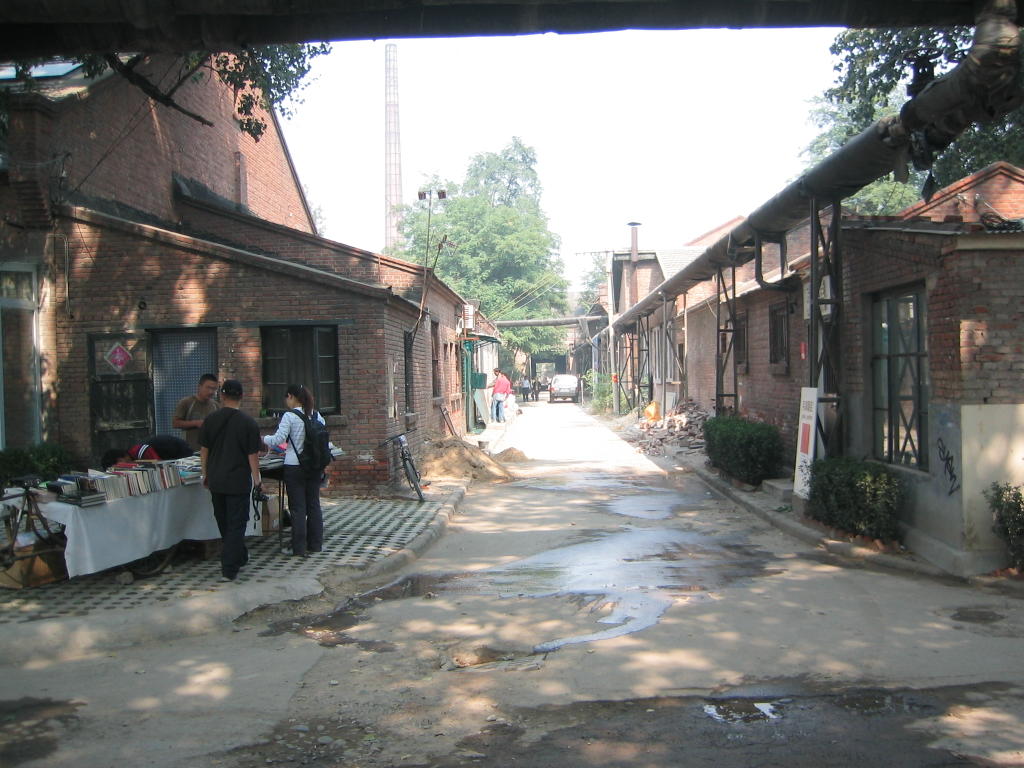
An alley behind Hong Qiao market, a giant indoor collection of shops and stalls selling generally cheap clothes, housewares, shoes, toys, souvenirs and cheap and expensive jewelry. A family friend kindly showed me this neighborhood over the weekend: where and how she gets her watches, bedspreads, kitchen supplies, etc.

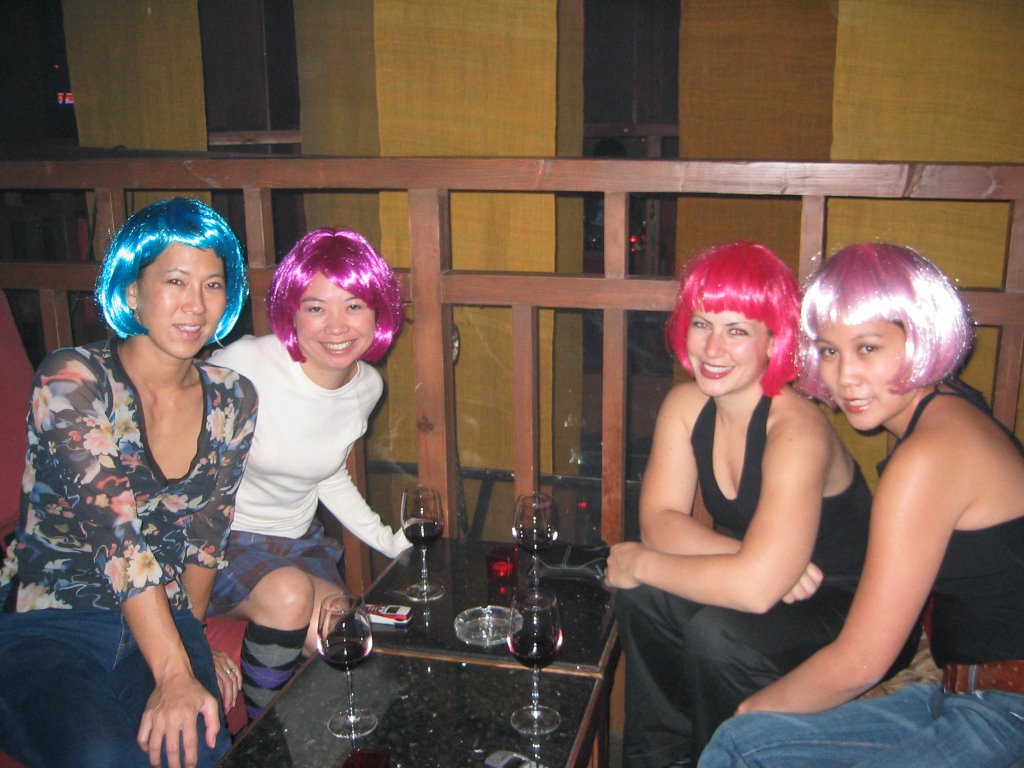
Halloween at Club Nuage in Houhai. Amazing what you will do under peer pressure. We were: two Chinese Americans, one Filipina-Canadian and one Caucasian American, who quickly became the target of a well-off Chinese guy who kept his girlfriend or date waiting downstairs while he hit on Amy.

Thursday, October 27, 2005

My parents and the paper's assistant managing editor in charge of foreign news were both in town last week, so I'm spending much of this week catching up. There's a test tomorrow on nearly 300 characters in my Book 1 before I can move on to Book 2. I need 3,000 characters to read a Chinese newspaper.

Tried to take my parents to places not yet on the tour bus circuit. They've already seen the Forbidden City, Great Wall, Temple of Heaven, etc. Retired architects, they thought the way artists have renovated warehouse space was interesting. "They're very good at copying," aren't they?" Dad said. Oddly, he had no interest in the hutongs - the endangered species of old Beijing.

Typically, much of their visit revolved around food. We had lunch with his old classmates, all from the Jesuit-run St. John's University in Shanghai, which Dad left in 1952. One friend went on to work for GM. Another became a top soccer coach. Another emigrated to NY. Unsurprisingly, they didn't discuss how differently their lives have turned out. But I wonder if it's the elephant in the room. They did berate Dad for not forcing me to speak Mandarin as a child (Mom, who speaks Cantonese, escaped the lecture).

Had dinner with the grandaughter of an aunt of my Dad's. She’s 20-something and studying interior design and landscape architecture at Tsinghua University. She tells me that my architect Grandpa, Fan Wenzhou (actually Wenzhao), (Cantonese and Mandarin phonetics not the same) was well-known and that I should go to Shanghai to see more of his buildings. My grandfather studied under Paul Cret and graduated from the University of Pennsylvania, class of 1921. I have already seen a Bauhaus-style apartment building (my Dad’s childhood home), a theater and the Sun Yat Sen memorial in Nanking, which he worked on. But Lei Lei is right: I should learn more.


The weather is turning. I bought brand-name black cordruoy pants for $12 only to be told by my conversation partner that I overpaid. A tailor hemmed them for me for 75 cents.

Met the Country Director for the World Bank yesterday. In his office is a coffee table book on environmental degradation which mentions a bachelor village in Gansu Province populated only by middle-aged men. It's such a parched and hostile environment that women refuse to marry men and move there. What an interesting story, except that I'm not reporting yet.

Monday, October 17, 2005


Shangxia Jiu Pedestrian Street, Guangzhou

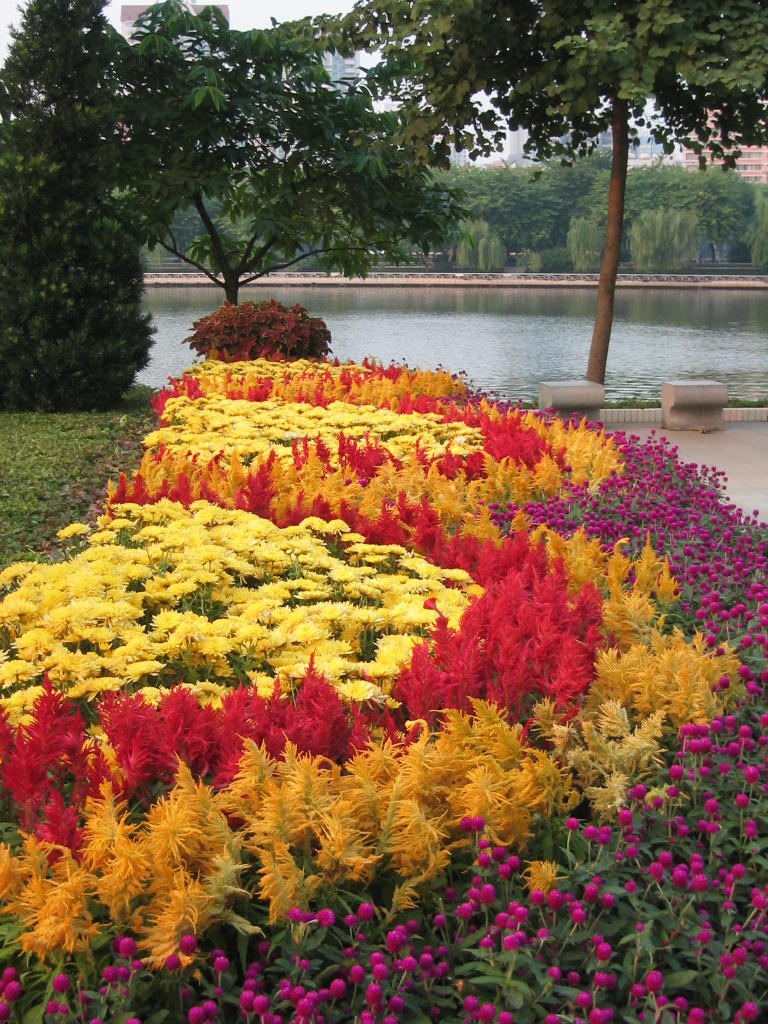
Dong Hu Park

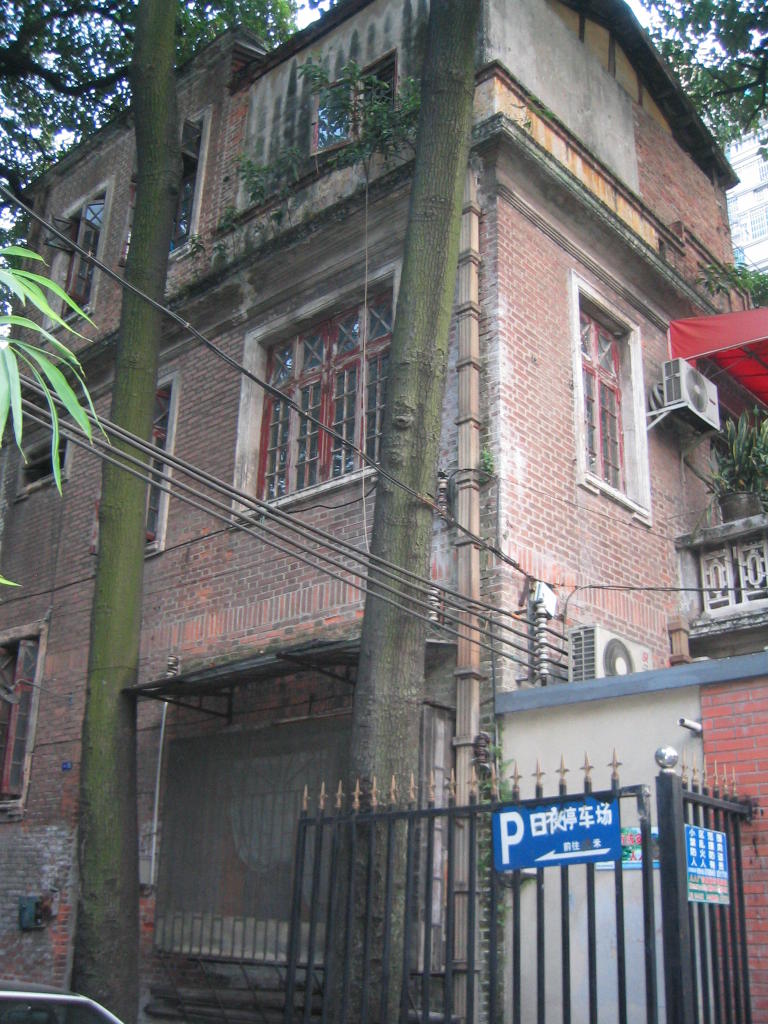
Traces of Old Canton, DongShan neighborhood

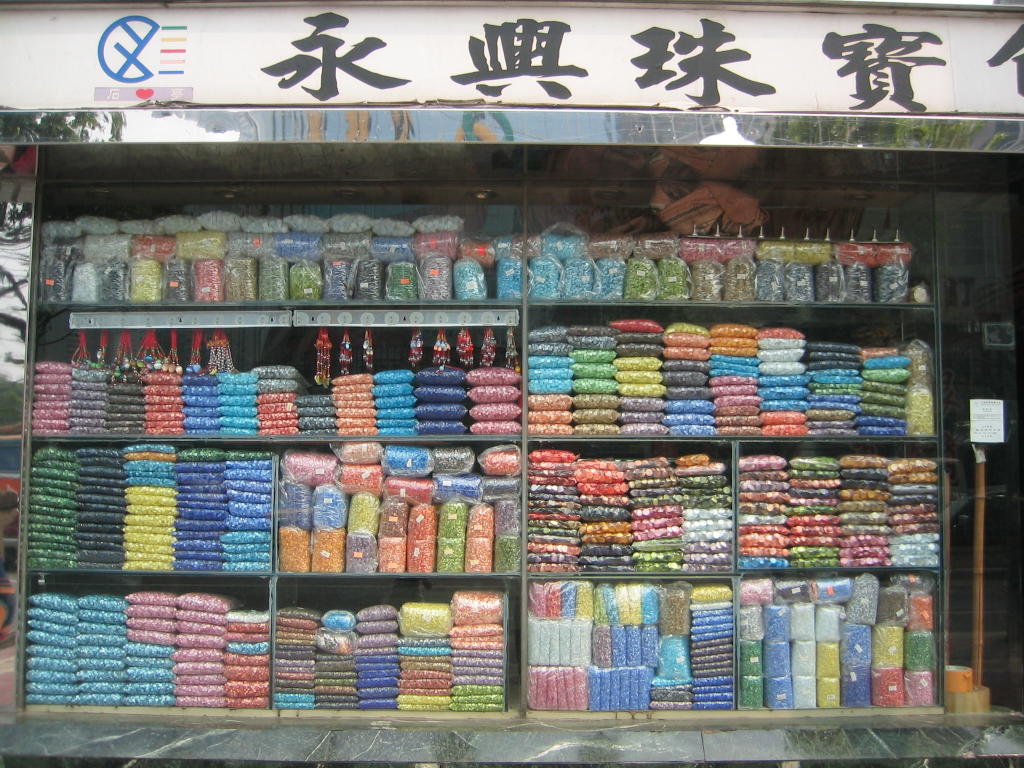
Bead shop on Kang Huang Street
Just back from a long weekend in Guangzhou, where I stayed with a friend of a friend. In a way, it's my "village," if I have such a thing. My mother's mother left Guangzhou for Hong Kong. My father, born and raised in Shanghai, is Cantonese.

It was a change of pace to actually understand what everyone was talking about, if not every sentence. Before I started studying Mandarin again, I would've been able to string together several coherent Cantonese sentences. Now, my sentences come out mostly in Putonghua, with Cantonese words where I couldn't think of the Mandarin equivalent. It sounded atrocious but gave me the illusion of progress.

On the three-hour flight down, a yoga instructor gave a video demonstration of how to relieve stress. The all-Chinese bookshops in Guangzhou airport carried self-help books on how to grow your wealth. Passengers stood up the moment the plane landed (before it left the runway) and began shouting into their cellphones.

Guangzhou is more laidback and more lush and green than Beijing, but just as grey and choked with traffic. Population: 3.2 million. Parts resemble LA with crisscrossing freeways smack downtown. Other parts look like Hong Kong with worn skyscraper apartment blocks so close together it seems you can reach from one to another. Older parts of town remind me of Macau and its colonial Portuguese architecture.

Parks are full of fragrant frangipani trees and old Banyans with long, intertwined above-ground roots. There was plenty of streetlife along the Pearl River, from lovers to drunks to pickpockets, all bathed in fluroescent light. And good people-watching in DongShanHu Park and at the massive seafood restaurants where you pick your own live dinner. It's like going to an aquarium and then eating the exhibits: big groupers, Australian lobster ($40 for just over a pound), wriggling silkworm larvae, snapping turtles, snakes and rockfish - which can kill if you step on one accidentally.

All the big restaurants seemed to have widescreen flat panel TVs and projection screens, tuned to news or blaring entertainment. A real-estate agent friend here said the louder the restaurant, the better. It's proof your evening has been really exciting. And Cantonese people are always eating. Morning tea before breakfast, afternoon tea following lunch, dinner in one restaurant and then dessert and drinks in another.

Tea bowls for cleaning your fingers after peel-and-eat shrimp are common in Hong Kong and Guangzhou but not throughout China. So Chinese tourists are increasingly coming to Guangzhou and trying to drink from their finger bowls, even with the tell-tale slice of lemon in them, our local hosts said. One of our hosts who speaks Mandarin, Cantonese and English (is learning Spanish) said she felt like she had a different personality when she spoke Cantonese. She's more serious in Mandarin, much more expressive in Cantonese.

Had lakeside dim sum one day and a simple noodle lunch off a busy pedestrian street the next. Less than ten years ago, Shangxia Jiu pedestrian street was lined with old residences. Now it teems with people mostly in their 20's and 30's buying sneakers, wooden toys and cheap costume jewelry with their parent's money.

We walked through the narrow winding alleys of a jade market where the bright pink, purple and turqiose colors made you wonder why the other vendors bothered insisting that they were selling the real thing. In the east, we looked at old brick houses in the old Dongshan neighborhood. In the west we went to Siguan House, or the Liwan museum, to see the insides of what one of these old homes looked like.

Near the five-star Garden Hotel, where we waited for another friend to get off work, sidewalk cafes were full of expats: Koreans, Russians, Middle Easterners. Guangzhou is an hour and a half from Shenzhen and Hong Kong and full of import export traders. That's especially true this week, during the annual Guangzhou Trade Fair, the biggest event in town. Pizza joints and belly dancing clubs as well as high fashion stores selling $300 jackets and $600 pants have cropped up to serve the traders as well as wealthy Chinese.

Tuesday, October 11, 2005


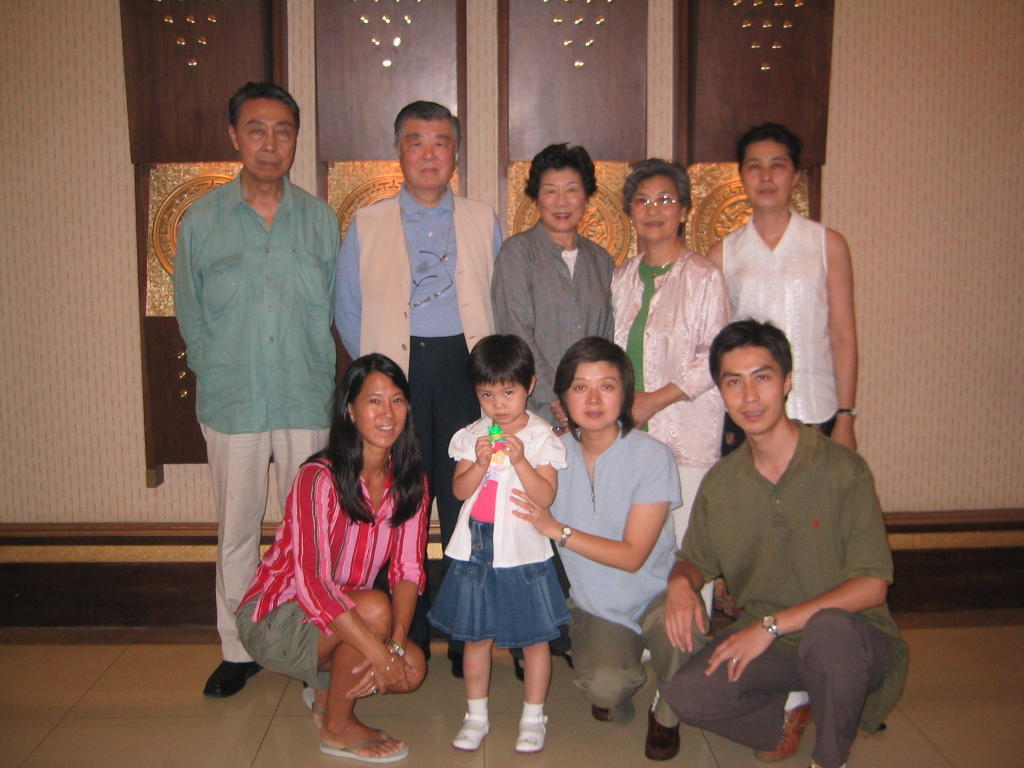
After lunch with the family of my Dad's former classmate (standing behind me). The couple in the middle of the back row are visiting from California.
Have caught my first cold here, and all five of my Mandarin teachers are unanimous: it must be the weather.

Like my parents, they believe that when it's cold outside, it's easier to catch a cold. If they told me to put on a sweater, they'd definitely be my relatives. They're not talking about lowered defenses or more people with germs crowding indoors. They say there is a Chinese saying that the body is more tired in the fall and spring when it has to adjust to cooler mornings and evenings and warmer afternoons. Winter and summer are easier because it's always hot or always cold.

The Bookworm, my local library / Wifi cafĂ©, was packed tonight for a reading by Jim McGregor, who launched his book tour in Beijing today. A former WSJ reporter and Dow Jones executive, his book is “One Billion Customers: Lessons From the Front Lines of Doing Business in China.” Like any good journalist, he saved for the book tour the parts he had to cut for reasons of taste. Like comparing guanxi to sex - it doesn't matter who's on top, make sure the other side isn't just pretending to be satisified, have layers of protection, do background checks, etc.

More interesting was his riff on how the Chinese are getting richer and richer but more and more psychologically confused. People are unsettled because they have no other mission in life other than to acquire wealth. They don't trust anything other than money and immediate family. There's not much introspection in Chinese culture, McGregor said. Feelings and emotions are bad for your health. Even Buddhism exorts you to leave feelings and desires behind.

China understands the US and the West much better than the other way around, McGregor said. China is modernizing, but not Westernizing. That worries a lot of people in Congress, where, according to McGregor, the sensible center is disappearing. On his trips back and forth to the US McGregor said he was hearing more and more from the extreme right and left.

But China also has a lot of responsibility for one of the biggest stumbling blocks to smooth relations: intellectual property issues, McGregor said. It's not just pirated CDs and DVDs (Bertolucci's The Last Emperor and the latest Coldplay album are $2.50 here; Hotel Rwanda and Ray (Charles) are just $1.25), it's fake airplane parts!

Meanwhile, have been meeting two conversation partners twice a week. One likes to talk about art and we went to another cluster of art galleries not far from Dashanzi. This time, everything seemed derivative to me.

Most of the artists had shaved or nearly bald heads. Most said confident, flirtatious things to my friend and me (how and why we should sign their guestbooks). Many hired underlings to paint or sculpt for them. There were images of Mao everywhere, including paintings juxtaposing Mao's sayings with American corporate phrases such as “You've Got Mail”(selling for $300). It seemed like one big clichĂ©, all geared to sell to foreigners.

The other conversation partner talked about one of her girlfriends, a former college classmate who is attractive, educated and employed but who can't leave a longtime boyfriend who refuses to marry her. The boyfriend is rich, hasn't worked for three years and dislikes her friends. But he never says no when she calls him up to go out. He belongs to a new class of Chinese who can afford US$850,000 two-bedroom apartments with goldleaf in the walls.

Speaking of which, there is a Beijing man who sometimes drives a yellow Hummer into my building's driveway. Not sure if it's true, but taxi drivers tell me there are only three or four Hummers in Beijing.

Saturday, October 01, 2005


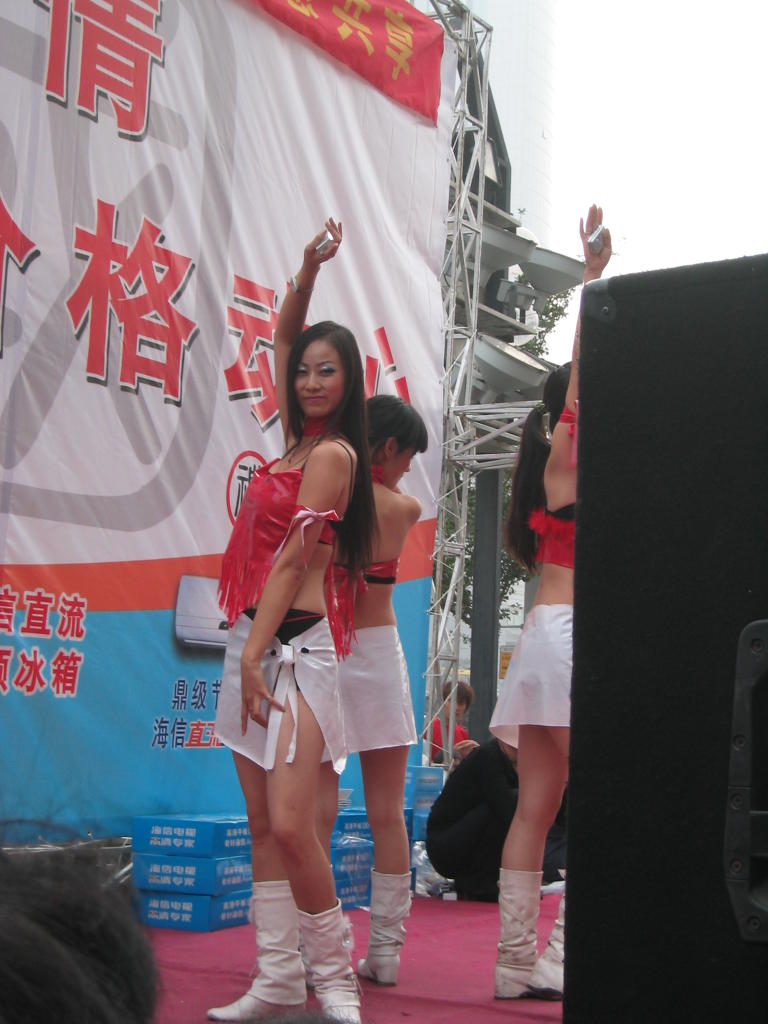
Outside a big electronics shop in West Beijing, a mostly-male audience gathered to watch scantily-clad women dance on stage in an apparent attempt to sell cell phones and home appliances.
Beijingers start celebrating National Day today by taking off for the suburbs or other cities, and Chinese from elsewhere flood into the capital. Monday, Tuesday and Wednesday are non-working days for most; some people take the whole week off.

Had lunch at the West Beijing home of my Dad's old classmate. Understood maybe 50% of what they were saying, but that was with them trying to speak slowly and simply for me. Delicious meal including homemade tofu skin and "ping yu" or fried flat fish. But was so brain dead afterwards I could barely cope with trying to buy a second set of bed sheets. No drying machine nor laundry rack: can't wash and dry my sheets in one day. I know winter, thick and inexpensive but not cotton, lambswool and cashier.

Met a few classmates for dinner the other day at a place in Sanlitun called the Den. It's a dive, popular with foreigners. I walked in with a bike helmet and my Martha's Vineyard T-shirt and they asked if I wanted a table for one. I said in Chinese that I was looking for my friends and decided to wait at at the bar. I told the waitress that she could speak Mandarin to me slowly and I could probably understand her, but she just kept repeating in English: "Half price. Happy Hour. Tsingtao."

When another Chinese-American TLI student arrived, wearing nice clothes, modest makeup and shiny lip gloss, the staff wouldn't let her in. In much better Mandarin, she also said she was meeting friends. But the staff insisted, "No!" Finally, she announced she was going in anyway, pushed past them and found me at the bar.

As we moved to sit outside, a friend of hers arrived, also of Chinese descent. She wore a sleeveless top, bold jewelry, makeup. As we tried to find a table, the staff seemed even more agitated. Then the friend opened her mouth and spoke in a strong French accent. It took awhile, but when the staff finally realized we were just foreigners instead of hookers, they finally started smiling.

Monday, September 26, 2005


798 Photo Gallery, Da Shan Zi.

"Charm and Strength - Mao Zedong and the Chinese Contemporary Artists," at the Xin Dong Cheng Space for Contemporary Art.

Factory 798 grounds, Da Shan Zi.
Sat. Sept 24

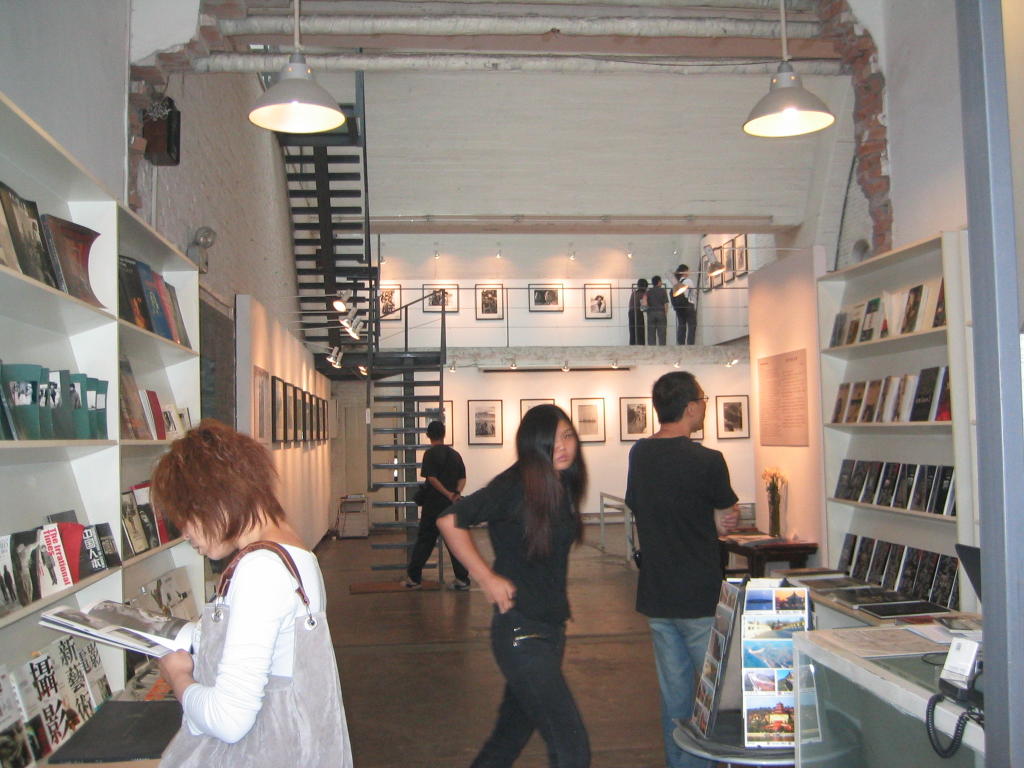
Took a 15 minute taxi ride this morning to "Qi Jiu Ba," in Da Shan Zi. The industrial factory neighborhood in northeast Beijing, named for Factory 798, is now a collection of artist studios and galleries. You can find good art bookshops here, a few trendy cafes and the occasional tour bus of giggling, young Korean women. My Chinese is not yet good enough to ask what the factory used to make. Some of the artists are still struggling, others have struck it rich. Western curators and embassy officials have left business cards at some studios. Da Shan Zi is not listed in either of my guidebooks, which is a good thing.

At the 798 Photo Gallery, black and white photographs showed a spectator trying to get a better view by balancing on the rear platform of his bike; a rural performer holding a bicycle aloft - in his teeth; and the front tire of an early morning commuter emerging in an otherwise empty hutong alley. The bicycle is a member of the Chinese family, the photographer, Wang Wenlan, wrote. At rush hour, cyclists in China are like a mobile Great Wall, he added, and "when you are in the midst of it, you feel like you are the blood in the veins of society, lively and vigorous, sensing endless potential."

Playing in the background was a continuous loop of a Leonard Cohen song: "I'm turning tricks. I'm getting fixed. I'm back on Boogie Street. You lose your grip, and then you slip ... you ditch it all to stay alive, a thousand kisses deep." I could have been in west Chelsea in Manhattan.

Some say this is where young people today have the most freedom in China. A book I saw described the photographs of Song Yongping's parents in old age, ill health and death, juxtaposed with pictures of his parents as young party loyalists. Song's point was reportedly to show a modern revolutionary couple "whose youthful strength and ardour were spent serving a cause that gave them no support or comfrort in their last days."

At the Marella Gallery, photos of the artist Li Wei with his head buried in the ground were supposed to partly reflect typical Chinese behavior. Losing face is a terrible thing, so nothing is expressed directly and everything is oblique and only hinted at. A published description of his art said Li was hiding from international terrorism as well as from China's rapid economic change and globalization, which was "driving humanity toward serious international conflict" which in turn was often reflected in personal, domestic conflict.

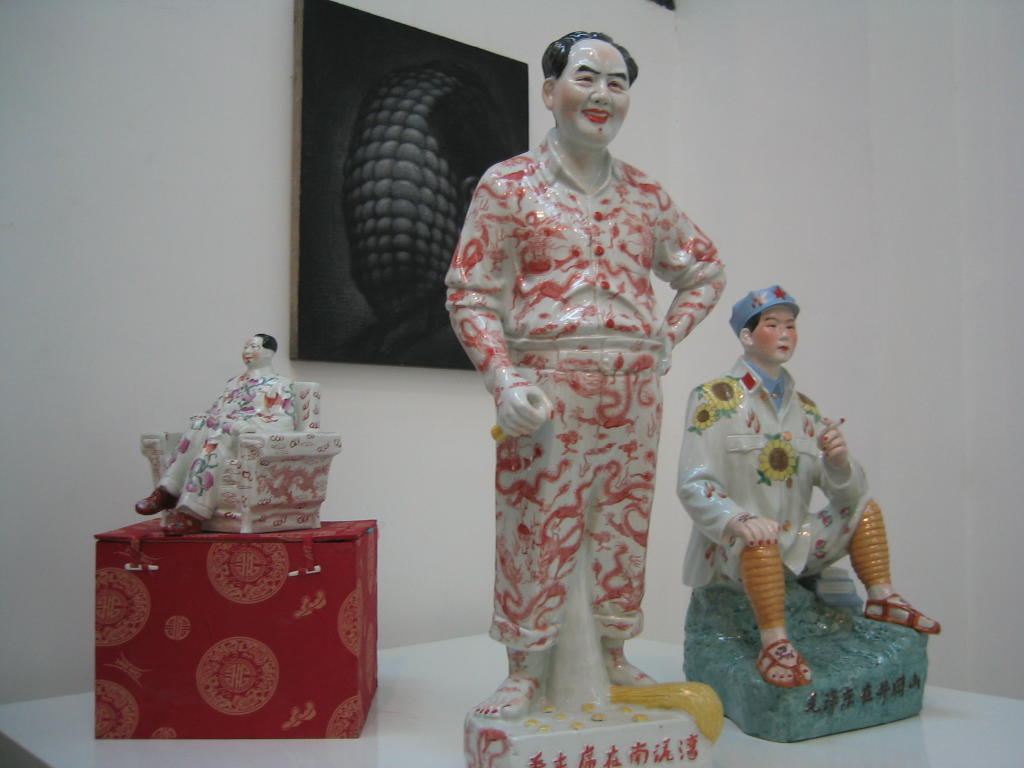
Mao as pop art remains a popular theme here. At the Xin Dong Cheng Space for Contemporary Art, there's a painting of him with Marilyn Monroe and several elaborately decorated porcelain figures of Mao that evoke Elvis or Liberace.

One of the more personal exhibits was by the artist Song Dong, whose mother was born into a prosperous family but then became impoverished. Her KMT officer father was imprisoned for seven years. After his release, her mother died. Other hardships followed.

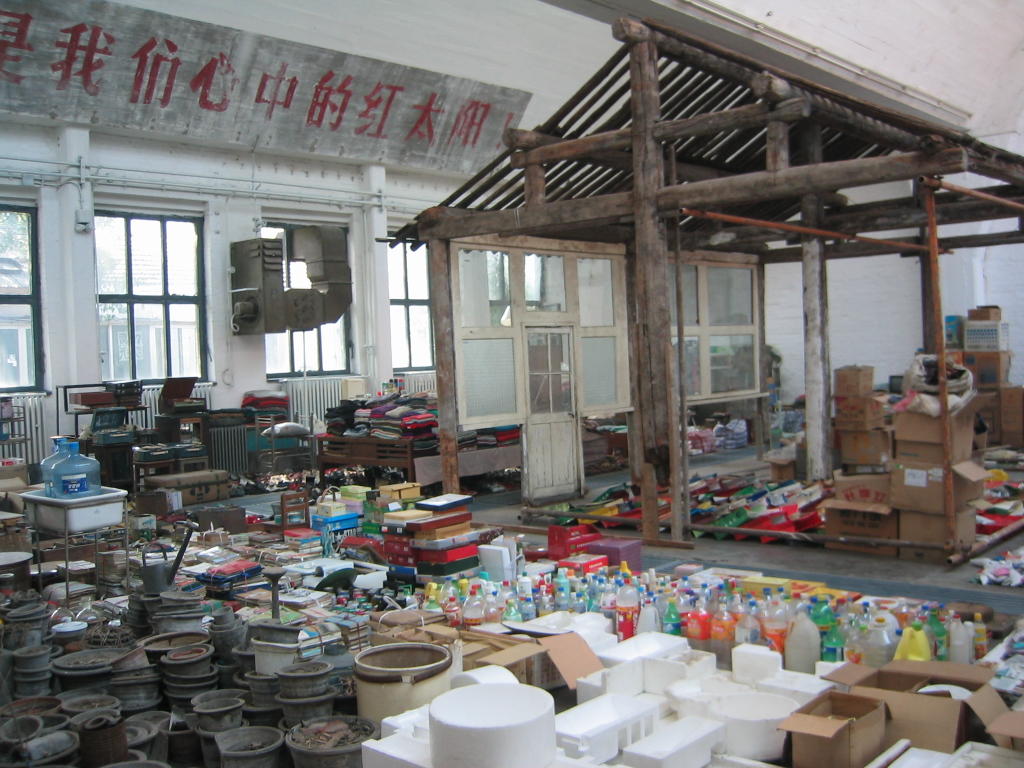
The Chinese saying "Wu Jin Qi Yong" refers to the traditional Chinese virtue of frugality and translates as "waste not." Song's mother, Zhao Xiangyuan, saved everything that might have a possible future use: plastic wash basins, scraps of cloth, old TV sets and phonograph players, clay pots, shopping bags, clips and pens. When her husband died in 2002, her collecting worsened as she tried to fill the void and hang onto the past.

Her son's art was a big room full of Zhao's household goods, arranged by her in neat piles against a wood frame house that represented her modest home.

"Today's young people can hardly understand the joy and sorrow involved in this type of collecting," the curator at Beijing Tokyo Art Projects wrote. "How could such messy, suffocating stuff make up an intimate environment, generating illusions of safety and even evoking secret memories?"

Song wrote that the project had helped his mother emerge from her grief. He had found a way to help clean out her house without angering her. And he had proved her right: all those things finally did serve some purpose.

Song Dong's "Waste Not," a display of objects collected by his mother, Zhao Xiangyuan, 67, over several decades.

Zhao Xiangyuan's shopping bag collection, sandwiched between her collection of old shoes and string.